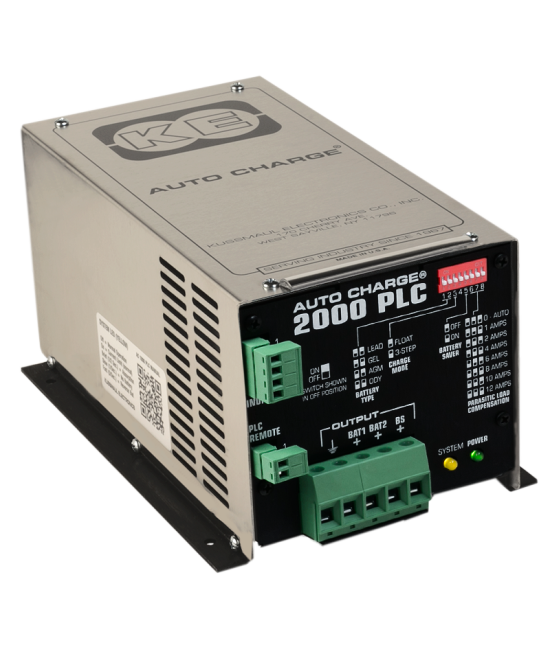
Auto Charge 2000 PLC
Product Code: 091-237-12
Description
- 18A total: 15A battery charger, 3A battery saver
- Microprocessor controlled, completely automatic operation regulates the output to a dual battery bank
- Precision voltage controller senses battery voltage, eliminating the need for sense wires
- Parasitic Load Compensation allows for user input of total accessory load amps on the vehicle. This allows the charger to shift the absorption stage set point so the battery voltage drops to the float voltage when desired current is reached
- Battery Type Selection Switches: Lead-Acid, Gel Cell, AGM or Odyssey
- Float / 3-Step Charge Mode Selection Switches
- 3 year warranty
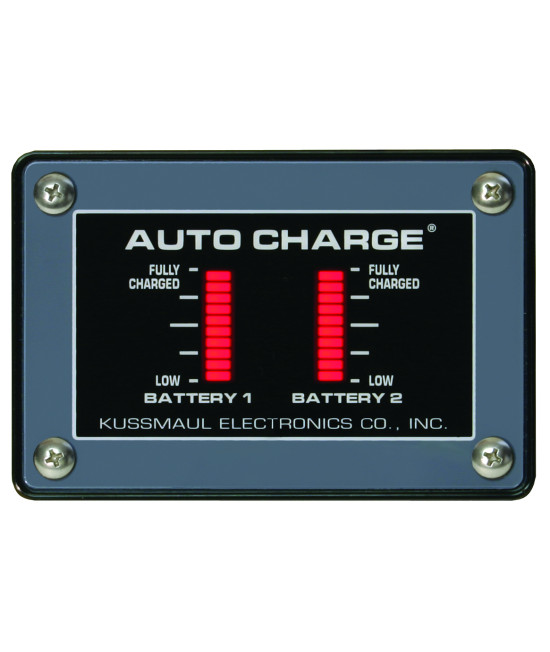
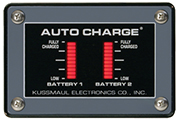
- Remote Bar Graph Included 091-39-IND
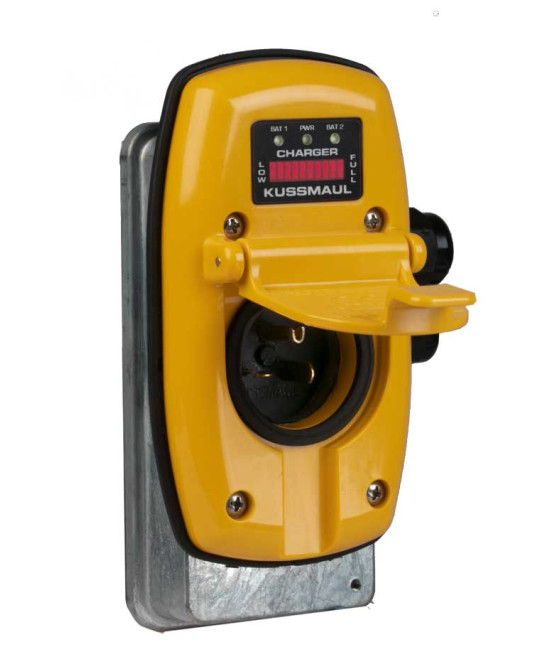
- Also will work with Auto Eject with Deluxe Cover, 63-11-7106 (20 Amps) 61-11-7106 (15 Amps)
| Remote Sensing | Electronic, Sense Lines Not Required |
| Battery Type Selection Switches | Lead-Acid, Gelled Electrolyte (Gel Cell), AGM or Odyssey |
| Output Power | Battery Saver: 13 Vdc, 3 Amps |
| Power LED Status Indicator | Green LED, Indicates 120 Volt AC Power Applied |
| Remote Display | Dual Bar Graph Display |
| System LED Status Indicator | Yellow LED, See Instruction Manual for Details |
| Torque | DC output connector 15 in/lbs |
| Input | 120 Vac, 60 Hz, 3.5 Amps Max |
| Input Fuse | 6 Amps, Fast Blow |
| Output | Battery: 12 Vdc, 15 Amps (18 Amps if Battery Saver is Turned Off) |
| Output Fuse | 40 Amps (Part Number: 090-0040-0) |
| Weight | 11 lbs |
| Warranty | 3 years |

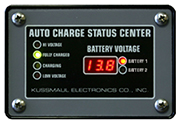
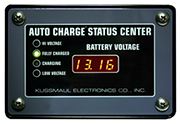

The Auto Charge 2000 with Parasitic Load Compensation (PLC) is a compact, microprocessor controlled, completely automatic, dual channel battery charger designed for vehicles with a dual battery system. The PLC charger is designed to withstand the shock and vibration encountered by vehicle mounted equipment.
This new Parasitic Load Compensation feature is designed especially to meet the heavy duty requirements of emergency vehicles. Most emergency vehicles have many parasitic loads on their systems (flash lights, gas detectors, computers, monitoring systems and other items) that can trick a standard 3-step charger into over charging the batteries. Parasitic load compensation allows you to input the total number of parasitic load amps on the vehicle. Then the charger will shift the absorption stage set point so the battery voltage will drop to the float voltage when the desired current is reached. In short the parasitic loads are invisible to the charger. This will lead to a longer battery life and no overcharging or overheating.